In my East Asian household shaped by Confucian values, obedience to parents was expected. But my journey of becoming myself began with a fight for autonomy. In high school, I clashed with my father over whether I was ready to make decisions for myself. I said yes. For a full year, we didn't speak. I found tutors, planned my study schedule, and managed my own life. That year, I also earned my best academic results—and discovered the cost and power of self-direction.
"I said yes. For a full year, we didn't speak. I found tutors, planned my study schedule, and managed my own life."
Later, I was mocked for being "too much." Classmates gave me the nickname "TJ," a jab suggesting that standing out made me dangerous. I shrank under the weight of that label—until I reclaimed it. After the college exam, I decided to own "TJ" as part of who I was. I began studying psychology to understand how people are silenced and how we can reclaim ourselves from shame and suppression.
In college, I thrived—4.0 GPA, youngest scholarship recipient, president of the mental health society. I believed effort alone shaped outcomes—until I declined to join a powerful professor's project. Suddenly, my grades dropped, and doors closed. He quietly retaliated while maintaining a kind public image. I learned that some failures aren't about merit; they're about power. Gatekeepers shape lives in ways others rarely see.
The Power of Gatekeepers
I learned that some failures aren't about merit; they're about power. Gatekeepers shape lives in ways others rarely see.
A close friend—born into elite privilege—later admitted our friendship was a test. He wanted to see if I'd abandon my values for access. That moment made me question: must power and kindness always conflict?
I wanted to understand—not just resist—these dynamics. So I cold-emailed my way into Columbia's psychology and AI lab, where my mentor told me something I'll never forget: "You can't leave the table." I'd seen how power can silence or uplift. I wanted to stay—to help write better rules. That's why I committed to the intersection of AI and psychology. AI, like past technologies, is redistributing power. I want to help steer that redistribution toward justice.
"You can't leave the table."
— My mentor at Columbia's psychology and AI lab
Today, I lead research at Stanford HAI, designing interventions that bring psychological insight into real-world systems by leveraging AI. I also mentor students—not just in research skills, but in how to navigate academia with integrity, and recognize toxic power dynamics before they get hurt. One of my mentees, for instance, became the first in our university's history to earn a master's offer in psychology from Cornell. Watching students grow into their own voices is one of the most rewarding parts of my work.
Around the same time, I worked with Adream, an education NGO, where I met teachers who had once dreamed of bringing equitable education to under-resourced regions. Many had grown disillusioned. Through behavioral science and deep listening, I helped them reconnect with the warmth that first brought them into education—not out of obligation, but because it once meant something to them.
Building Compassionate Communities
In both spaces, I've tried to build small, compassionate communities—starting close to me—that prove being a good person isn't weakness, and power doesn't have to mean conquest.
In both spaces, I've tried to build small, compassionate communities—starting close to me—that prove being a good person isn't weakness, and power doesn't have to mean conquest. I've learned that personal integrity doesn't have to disappear as responsibility grows.
"This is who I am: I take full responsibility for my life. I stay clear-eyed about complexity, but hold onto conscience and the courage to act."
This is who I am: I take full responsibility for my life. I stay clear-eyed about complexity, but hold onto conscience and the courage to act. Becoming TJ wasn't easy—but it's the kind of heroism my younger self believed in. And I still do.
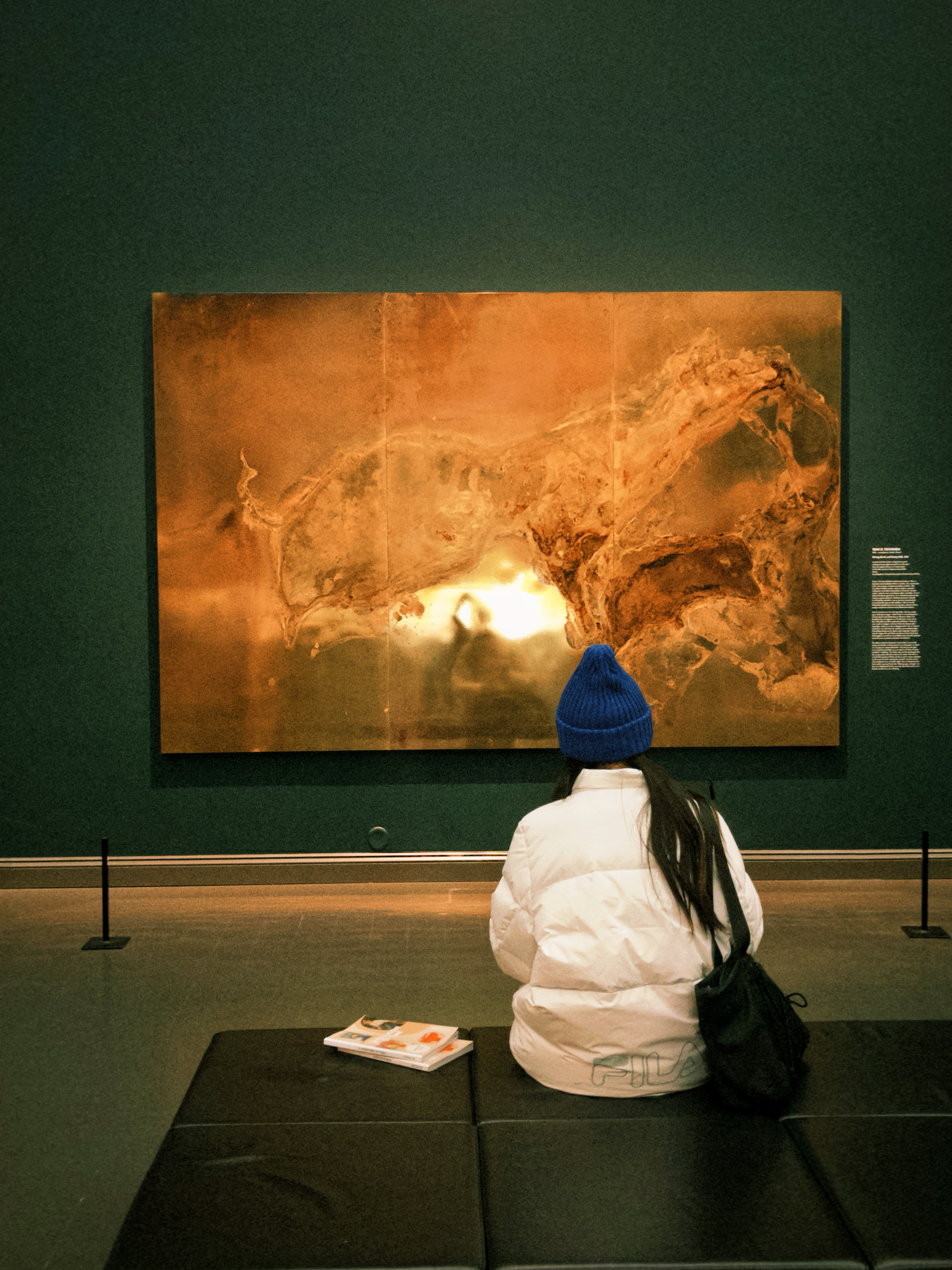
Captured at Ateneum Art Museum, Finland. I love this painting—it feels like the world is opening up before me.
Xianglu TANG
Psychology Researcher | AI & Human Agency Specialist
Stanford HAI & Columbia Business School